04
Floor Plan.
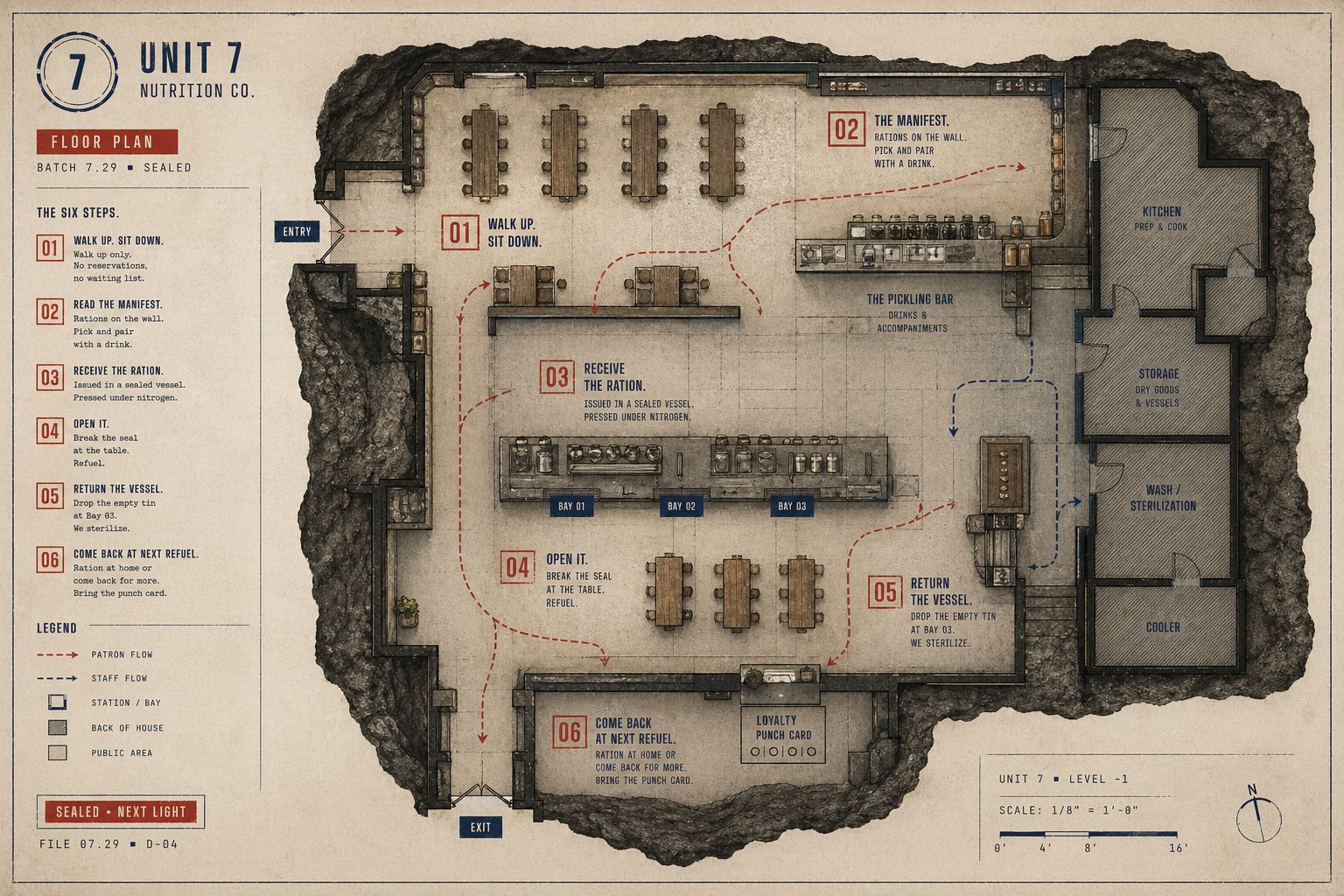
The room as a service diagram. Six numbered stations, patron flow in red, staff flow in navy, back-of-house in stripe — same vocabulary as the front-wall poster, drawn to scale.
An end-to-end identity for a eat like it matters dining concept.
Last Bite is a post-apocalyptic immersive dining concept where food is fuel. Set inside Unit 7, a preservation vault in what used to be Los Angeles, the restaurant serves organic, protein rich survival cuisine in sealed reusable tins.
FIG. A — UNIT 7
↗ shelter — 47m below
Last Bite repackages it as an experience. Climate resilient produce, low energy protein curing, zero waste service.
04
The room as a service diagram. Six numbered stations, patron flow in red, staff flow in navy, back-of-house in stripe — same vocabulary as the front-wall poster, drawn to scale.
05
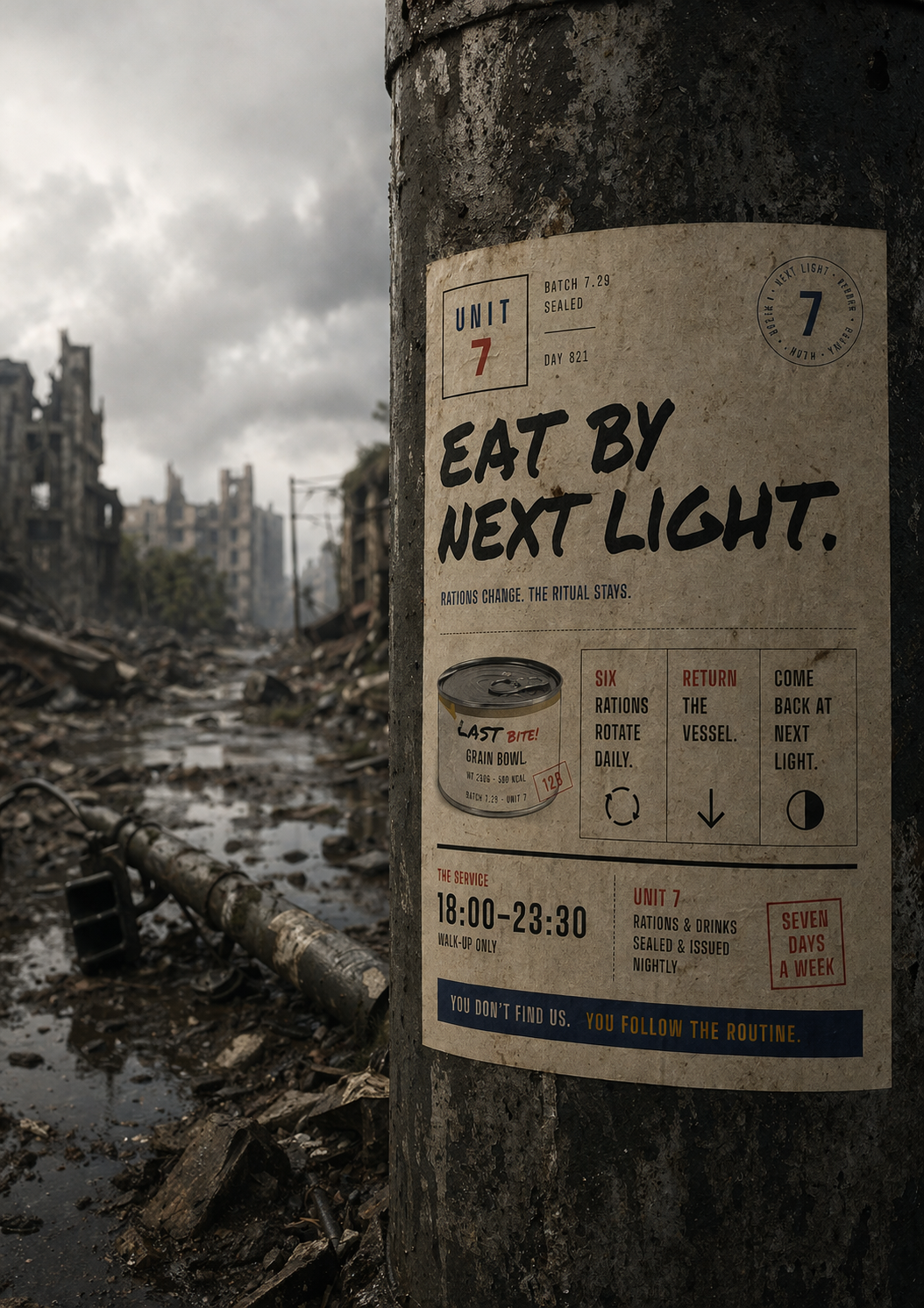
Wheatpasted on poles, walls, and barricades above ground. Eat by next light. No address. No QR. If you find it, you follow the routine.
06
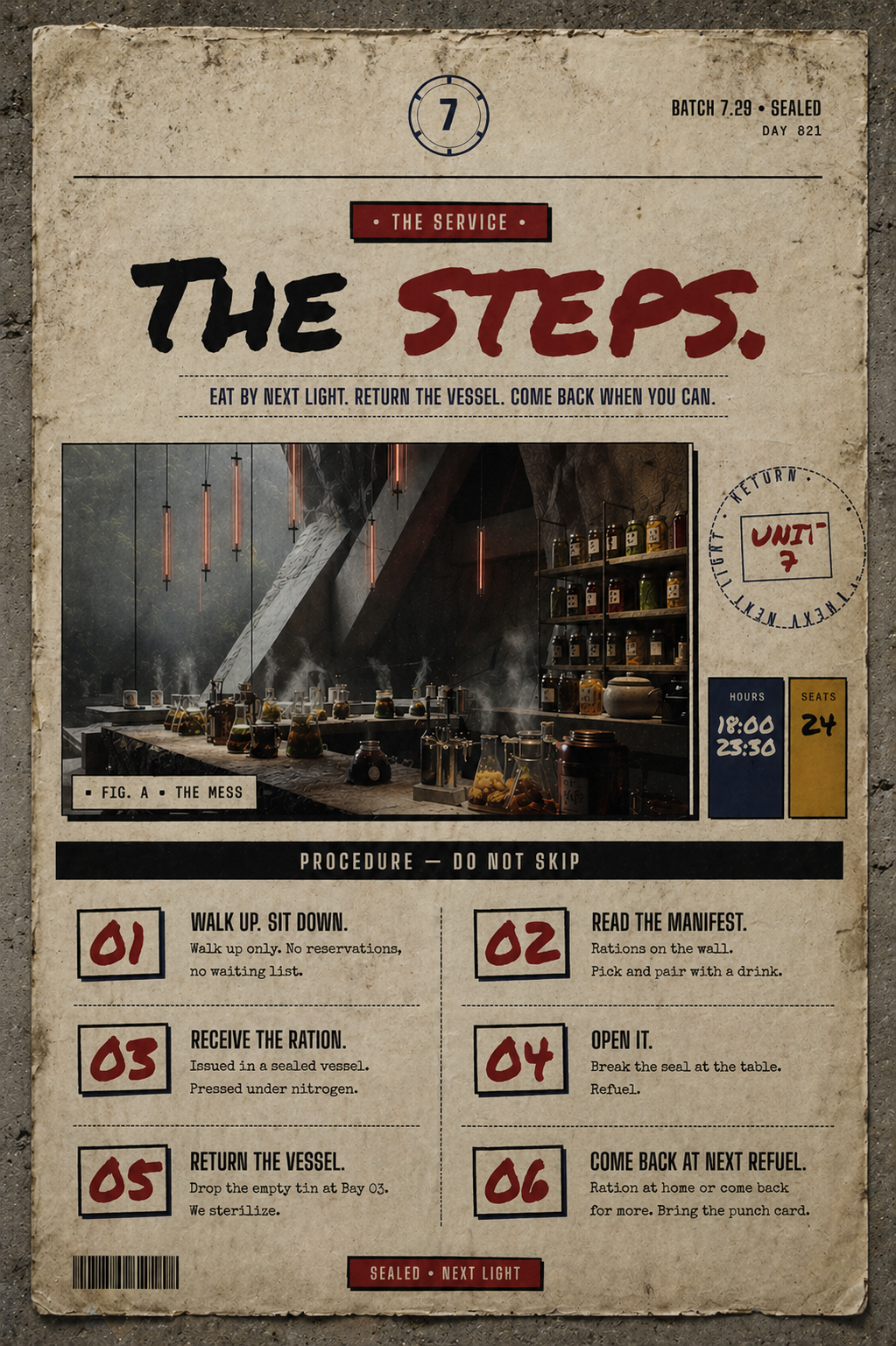
The instructions taped to the front wall of the restaurant. Six numbered steps from walk-up to next-light return — read once, eat by next light.
Permanent Marker, hand-set, rotated -2°. The "Bite!" subscript runs over a slashed red bar — a riff on RadAway's drug-label crossbar. Bitten on the right edge of the B (sawtooth chomp, three teeth) so the mark reads as something a body has touched, not something a logo machine produced.
Aged paper as ground; vault navy as primary; stamp red for warnings, prices and brush ink; mustard for utility and loyalty; ink as type. No gradients. No surface variation beyond paper grain.
Website and app allow customers to keep track of their credits, their returnables, drop locations, and new releases.
Last Bite is a preservation vault carved into rock. Climate-resilient produce, low-energy curing, returnable industrial vessels — wrapped in a service ritual that makes people lean in.
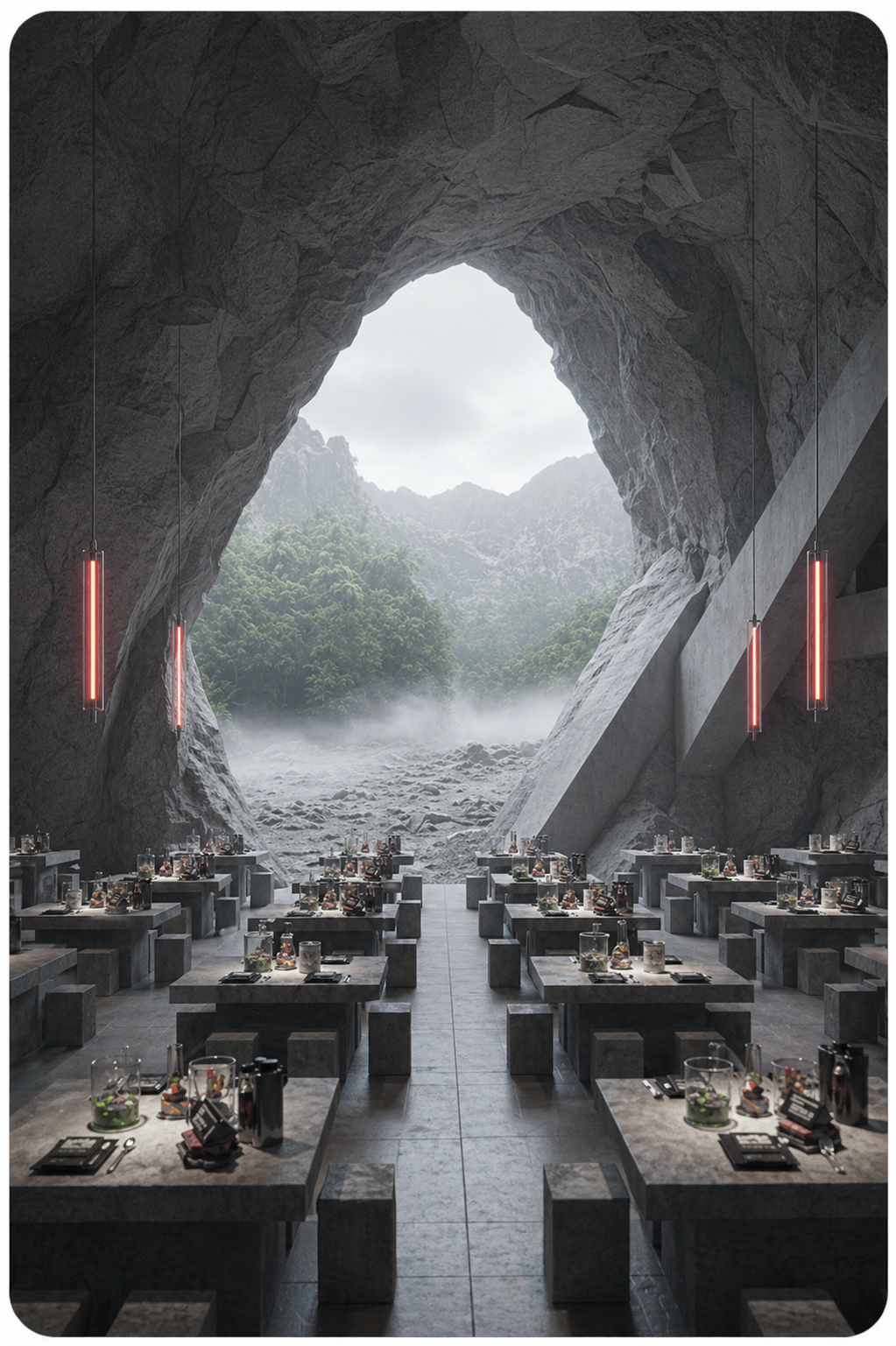
A cool gray hero image places the viewer inside Unit 7, using stone tables, preservation shelves, red tube lights, and misted daylight.
The manifest page turns menu items into ration cards. Each card borrows from the packaging system: vault-navy headers, stamped ration codes, dashed rules, typewritten descriptions, and red price tags. The grid feels printed and operational, like a service record pulled from the vault.
The mobile app works like a personal vault terminal, not a delivery app. Patrons use it to view today’s rations, track returned vessels, check patron credit, and manage loyalty marks. The interface translates the printed system into mobile: typewritten text, stamped codes, mustard labels, navy panels, red marks, and paper grain.